The Country and the City
First-year English course, taught in Fall and Winter semesters 2025-6 & 2026-7
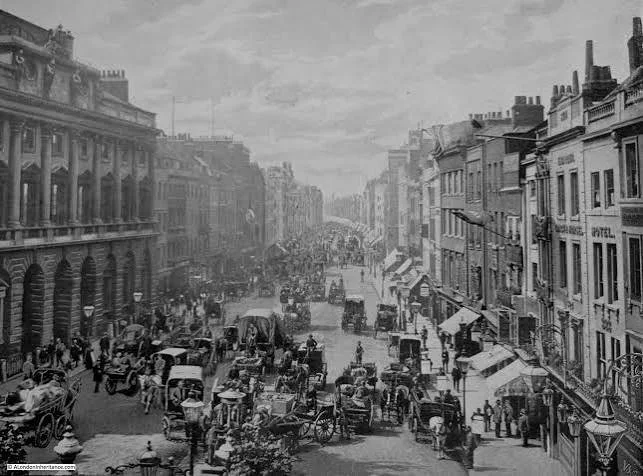
Course Description:
The two major narrative art forms of the 19th and 20th centuries – the novel and the film – are born out of modern, urban experience. How are the perceptions, feelings, and understanding of individuals transformed by the historical shift of human societies from mostly rural communities to large cities? This course will offer an introduction to literary analysis through the study of a range of fiction, films, and theory concerned with these transformations of human life through the growth of modern cities, and the subsequent nostalgia for the country as a simpler, more socially integrated space. The basic premise of the course, which we will deepen over the semester, is that the modern city produces both alienation in our loss of connection to community and nature, and freedom in how it separates us from familial and traditional expectations over how we live our lives. Assignments will include an oral presentation, an in-class midterm, and two essays, through which you will hone the skills of analysing a text and connecting it to larger ideas about the social world and human experience.
Required texts:
· Fyodor Dostoevsky, White Nights
· Anton Chekhov, The Seagull
· Paul Auster, City of Glass
Note: you need to purchase the versions of these texts that have been ordered for the campus store, so that you can follow class discussions which will refer to the page numbers in those editions.
We will also be studying three films, which you need to watch in your own time prior to the corresponding class session. All are freely available:
I Know Where I’m Going! (Michael Powell and Emeric Pressburger, 1945) – https://www.youtube.com/watch?v=PB5p2qPKsvA
Rear Window (Alfred Hitchcock, 1954) – available through the Audio Cine database via the StFX library website. Just search for “Rear Window” on the library catalogue search and follow the link to the copy listed as “Available online.” Make sure you’re logged into your StFX library account.
Die Hard (John McTiernan, 1988) – available through the Criterion on Demand database via the StFX library website. Just search for “Die Hard” on the library catalogue search and follow the link to the copy listed as “Available online.” Make sure you’re logged into your StFX library account.
Other required readings and viewing material will be made available to download from Moodle, and/or as printed handouts in class.
Evaluation:
In-class midterm 25%
Oral presentation 15%
Essay 1 20%
Essay 2 Prompt and Outline 5%
Essay 2 Full Submission 20%
Class participation 15%
A more detailed description of each piece of assessment will be provided closer to the time.
In-class Midterm: This test will be held in class in the week before fall study break. You will be asked to write in response to passages from texts we’ve studied and answer a mix of multiple-choice and longer-form questions on topics discussed in class.
Oral Presentation: Each student will give an individual oral presentation of 5–10 minutes at some point over the course of the semester, as a reflection on the reading or film assigned for that class period. Your presentation should offer your own thoughts about the reading in relation to ideas discussed in class. You are allowed to bring notes, but you cannot read directly from a pre-written script.
Essay 1: For this essay, you will respond to a prompt I give you, writing an essay of 1500-2000 words on one of the primary texts we’ve studied alongside one secondary text.
Essay 2 Prompt and Outline: For this essay, you will devise your own prompt in consultation with me. Your essay will need to engage with one or two of the primary texts we’ve studied, and at least one secondary source. You will first submit your prompt and an outline of your essay, which I will provide feedback on before you complete the full submission.
Essay 2 Full Submission: This will be an essay of 2200-2500 words. It can either be a comparative essay of two of the primary texts we’ve studied, or a more focused research essay on one of the primary texts along with multiple secondary sources. Your full submission will be assessed partly in light of how you have integrated my feedback on the prompt and outline.
Class Participation: The participation grade is for attendance and participation in class discussions. This is assessed holistically, accounting for the fact that some students are naturally quieter than others, and that speaking more than others doesn’t automatically make you a better contributor. There will be a mix of general group discussions and small-group activities to encourage students to participate in ways best suited to them. But students who appear disengaged will be asked to participate more, and continual disengagement during class time will impact your participation grade. To be clear – you do not automatically get the full participation grade just by showing up, and are expected to show engagement. More than two unexplained absences from class will also impact this grade.
General Class Guidelines:
· Learning is fostered by a respectful and equitable environment, free from discrimination and harassment. Please make sure to engage respectfully with your peers.
· Laptops, phones, and other electronic devices are not permitted in class, except in cases of an exemption for accessibility reasons, or if we are doing a specific activity which calls for it. Time in class is an opportunity to focus on your learning without distractions, and to practice note-taking by hand, which can be beneficial to your learning. Please get in touch if you have any accessibility issues.
· With this in mind, I highly recommend using a lined notebook to take notes in during class over the course of the semester, so that you have this material together in one place to refer back to.
· PowerPoint presentations from class will be made available on Moodle after the class session. You don’t need to look at the slides on your own screen during class, unless I specifically ask you to. Just observe and engage, write notes, and refer back to the slides on Moodle after class.
It is essential to watch each film and complete all required readings prior to the corresponding class. For several of the readings on Moodle I will also provide printed handouts, which you will need to hold on to and bring to class when we’re discussing them.
If you need to leave class early, please notify me in advance wherever possible. Unexplained early exits from class will be counted as absences.
Please communicate with me about any issues that affect your ability to attend class or complete the course assignments. I’m available via email, in my office hours, or to talk to after class.
Course Schedule:
Primary texts and required readings must be read/watched before the corresponding class session in the schedule. “Further reading” indicates secondary sources which I will introduce in class, and which are optional to read before class, but which may be helpful resources for your essays.
Minor changes to the schedule may be made as the semester goes. I’ll give you notice of any such changes.
Tue 8/9
Aesop, “The Town Mouse and the Country Mouse”; The Kinks, “Village Green”; Friedrich Engels, “The Condition of the Working Class in England”
Tue 15/9
PRIMARY TEXT: FILM: I Know Where I’m Going! (Michael Powell and Emeric Pressburger, 1945)
REQUIRED SECONDARY READING: Raymond Williams, The Country and the City, excerpt
FURTHER READING: Pam Cook, “BFI Film Classics: I Know Where I’m Going!”, pp. 29-40; 95-97
Tue 22/9
REQUIRED READING:
Karl Marx and Friedrich Engels, “The Communist Manifesto”
Pierre Bourdieu, “The Peasant and His Body,” excerpt
FURTHER READING:
Derek Sayer, Capitalism and Modernity, excerpt
Ernst Hirsch Ballin, Citizens’ Rights and the Right to be a Citizen, excerpt
Tue 29/9
PRIMARY TEXT: FILM: Rear Window (Alfred Hitchcock, 1954)
REQUIRED SECONDARY READING:
Georg Simmel, “The Metropolis and Mental Life”
Laura Mulvey, “Visual Pleasure and Narrative Cinema,” excerpt
FURTHER READING: Elise Lemire, “Voyeurism and the Postwar Crisis of Masculinity in Rear Window”
Tue 6/10
PRIMARY TEXT: Fyodor Dostoevsky, White Nights
REQUIRED SECONDARY READING: Talcott Parsons, on marriage – Essays in Sociological Theory, p. 187
Georg Simmel, “Eros, Platonic and Modern,” pp. 241-2
Tue 20/10
PRIMARY TEXTS: Anton Chekhov, “Gooseberries”
Chekhov, The Seagull, Act 1
Tue 27/10
PRIMARY TEXT: Chekhov, The Seagull, Acts 2-4
Tue 3/11
PRIMARY TEXTS: Rainer Maria Rilke, The Notebooks of Malte Laurids Brigge, pp. 1-20
Charles Baudelaire, The Painter of Modern Life, excerpt
Tue 10/11
PRIMARY TEXT: Paul Auster, City of Glass, 7-92
REQUIRED SECONDARY READING:
Fredric Jameson, excerpt from “Postmodernism and Consumer Society”
Tue 17/11
PRIMARY TEXT: Auster, City of Glass, 93-203
Tue 24/11
PRIMARY TEXTS:
FILM: Die Hard (John McTiernan, 1988)
Ling Ma, “Los Angeles”
REQUIRED SECONDARY READING:
Fredric Jameson, excerpt from Postmodernism, or The Cultural Logic of Late Capitalism
Tue 1/12
PRIMARY TEXTS:
Allen Ginsberg, “A Supermarket in California”
Walt Whitman, “Crossing Brooklyn Ferry”
REQUIRED SECONDARY READING:
Robert Putnam, excerpt from Bowling Alone: The Collapse and Revival of American Community